Contact Lenses
21st Nov 2024
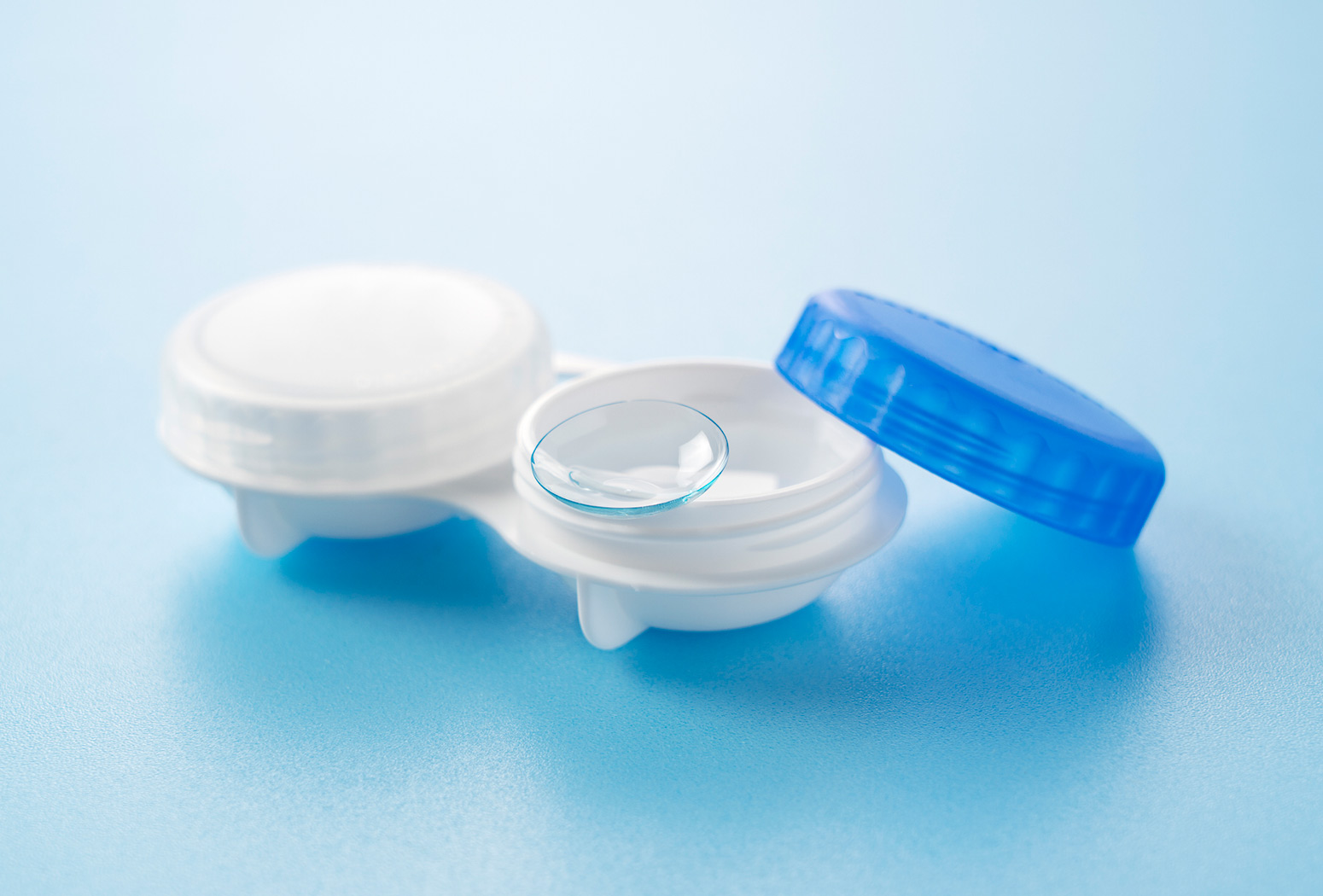
A contact lens is a small circular curved visual aid which sits on the cornea of the eye to correct your vision. It is a wonderful alternative to spectacles and a great option for correcting your vision.
Contact Lenses Are Easily Accessible And Now Available To Correct A Wider Range Of Powers, Particularly For Astigmatism And Presbyopia.
History
The concept of a contact lens to correct vision and to be worn over the eye was first proposed by Leonardo da Vinci in 1508, They only became commercially available in the 1940s as rigid lenses.
Soft lenses became available in the 1970s and over the years with improved lens materials and refined manufacturing techniques, these have become the most popular and widely accepted to be the first choice for fitting compared to rigid lenses.
Contact lenses are now more frequently discussed during the eye exam as another option for vision correction as they have many advantages.
If you are considering contact lenses, your optician will offer you a consultation appointment and this is what it will entail.
Initial Assessment
You will be asked why you are interested in contact lenses and it will be explained how they enable you to see.
Intended wear will be asked if you are presbyopic (requiring near vision correction), and you will be asked if you would like to see without the need for reading glasses.
Further information on your lifestyle, hobbies, health, medication, ocular history and allergies will be asked. This is to ascertain your suitability.
Measurements
The curvature of your eye will be measured (not always measured for soft lens fitting) for a baseline reading. Depending on the lens to be ordered, the following will be measured:
- Length and width of your eye.
- Pupil diameter
Slit Lamp Exam
The health of your eyes will be assessed, by looking at:
- Lids and lashes
- Cornea – window of your eye.
- Conjunctiva – the ‘white’ of the eye.
- Limbus – the junction between the cornea and conjunctiva
Also, your eyelids will be everted as the lens is in contact with that area on blinking.
Discussion
You will be told whether you are suitable to trial contact lenses and the options available to you. Most prescriptions can be corrected with daily disposable, monthly and bi-monthly disposables. There are some limitations to availability with high astigmatism and long/far-sighted prescriptions.
Ordering Of Trial Lens/Insertion
If the lens is available in stock, the lens is inserted (if consented) by the Optician/Optometrist for assessment of vision and fit. This will be done after 5-10 minutes of wear to allow the tearing to settle.
Tearing is quite normal for first-time wearers. If the lens needs to be ordered, the assessment of the lens is done on a separate appointment.
Final Stage
If all is okay and there are no issues then you will be shown how to insert, remove and take care of the lenses.
This is referred to as a Teach.
Who Should Consider A Contact Lens Trial?
There are many reasons why this should be considered which include:
- Sports – for safety, particularly great for martial arts. Spectacles can cause limitations on peripheral vision and improve coordination.
- High prescription – could offer the possibility of clearer vision compared to spectacles. Myopia control lenses are frequently recommended for children which is relatively new and is intended for slowing down myopia progression.
- Convenience – do you find spectacles a nuisance? Or you don’t like wearing them?
- Special occasions and Holidays- look great in photos.
- Be able to wear non-prescription sunglasses – seasonal wear.
You may be recommended for therapeutic purposes such as dry eyes and certain eye conditions may require the wear of contact lenses.